Difficult conversations aren't always difficult because of what needs to be said.
Sometimes they're difficult because of what we fear might happen after we say it.
Difficult conversations are part of almost every workplace.
You may need to give constructive feedback to a colleague, receive feedback about your own work, speak to your manager about feeling overwhelmed, ask for a promotion, explain why a project isn't progressing as expected, or raise a concern that could affect the team. Sometimes the conversation has been sitting in your mind for days or even weeks before it finally happens.
Often, it's not because you don't know what you want to say.
It's because you're wondering what might happen once you say it.
Will they understand? Will they become defensive? Will it change the relationship? Will they think differently of you? Will this create conflict that can't be undone?
It's easy to assume the challenge is simply finding the right words.
But if you've ever rehearsed a conversation over and over, rewritten an email several times, or delayed speaking because you were unsure how the other person might respond, it's worth asking whether the real difficulty is not the conversation itself, but everything you imagine it could change.
There's often more
beneath the conversation.
From the outside, a difficult conversation can look like a communication problem. Maybe you need to be more assertive, prepare what you're going to say, or find a better way to give feedback. Those skills can certainly help, but sometimes knowing what to say isn't the part that makes the conversation difficult.
You may be trying to protect a working relationship while also being honest. You may want to give someone feedback without making them feel personally criticized, or listen to feedback about your own work without allowing one decision or moment to become a judgment about who you are. You may need to disagree with someone whose opinion matters to you, or raise something important without knowing how the other person will respond.
That's why finding the perfect words doesn't always make the conversation feel easier.
Instead of asking,
"How do I say this without making things uncomfortable?"
it can be more helpful to ask,
"What feels at risk if I say what needs to be said?"
That question changes the conversation because it creates space to understand what you're trying to protect. Perhaps it's trust, respect, belonging, your professional reputation, the other person's feelings, or simply the relationship as you currently know it.
Understanding what feels at risk doesn't tell you whether to speak or what the outcome will be. But it can help separate the conversation you actually need to have from everything you're imagining might happen because of it.
A different place to begin.
At Phoenix Awakening, we don't begin by teaching communication techniques or asking you to become more confident before having a difficult conversation.
We begin by exploring your relationship with connection.
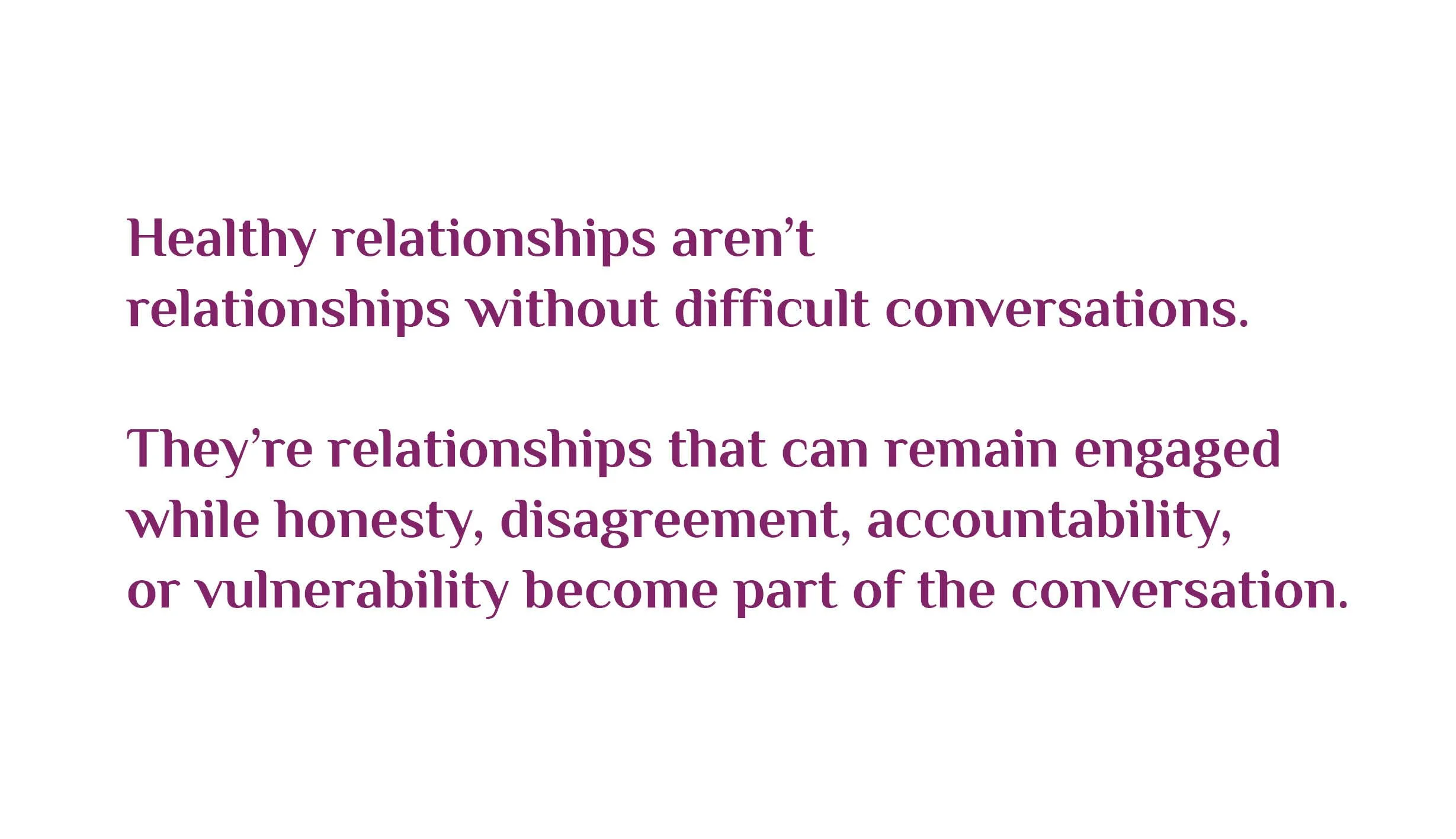
Because connection isn't about always agreeing, avoiding conflict, or making sure everyone leaves happy. Healthy relationships aren't relationships without difficult conversations. They're relationships that can remain engaged while honesty, disagreement, accountability, or vulnerability become part of the conversation.
Sometimes we avoid speaking because we're trying to protect the relationship. Other times we become defensive because the conversation feels as though it threatens our place within it. We may find ourselves carefully choosing every word, rehearsing possible outcomes, or delaying the conversation until the 'right' moment arrives. Yet even with careful preparation, there is one thing we can never completely control.
How another person will respond.
Strengthening your relationship with yourself doesn't mean every difficult conversation will become easy.
It changes your relationship with what happens when the conversation becomes difficult.
Instead of asking,
"How do I make sure this conversation goes well?"
you begin asking,
"How can I remain connected to myself, the other person, and the relationship, even if we do not agree?"
That question creates space to participate differently. Instead of trying to control every outcome, you begin focusing on the quality of your own participation—speaking honestly, listening with curiosity, respecting both yourself and the other person, and recognising that healthy relationships are strengthened not by avoiding difficult conversations, but by learning how to move through them with greater awareness and intention.
What becomes possible.
As your relationship with connection begins to change, so does the way you experience difficult conversations.
You become less focused on finding the perfect words or guaranteeing the perfect outcome, and more interested in participating in conversations with honesty, curiosity, and respect. Instead of carrying the responsibility for how every conversation will end, you begin recognising the difference between the quality of your participation and the parts of the conversation that belong to someone else.
That doesn't mean every conversation becomes comfortable or every relationship remains unchanged. Some conversations will still involve disagreement, disappointment, or difficult decisions. Others may reveal that a relationship needs healthier boundaries, different expectations, or even a different direction altogether. The difference is that you no longer measure the success of the conversation only by whether everyone agrees. You begin measuring it by whether you participated in a way that remained aligned with your values while respecting both yourself and the other person.
Over time, you discover that connection isn't maintained by avoiding difficult conversations. It's strengthened by learning how to move through them with greater awareness, honesty, and care. As your relationship with connection grows, feedback becomes less personal, disagreement becomes less threatening, and conversations that once felt impossible begin to feel more approachable.
Because difficult conversations aren't always a sign that something is wrong with the relationship.
They're often how healthy relationships continue to grow.
Ready to approach difficult conversations differently?
If you've been avoiding an important conversation, replaying one that didn't go the way you hoped, or wondering how to speak honestly without damaging the relationships that matter to you, perhaps the answer isn't finding the perfect script.
Perhaps it's strengthening the relationship with yourself that allows you to remain connected while honesty, accountability, disagreement, or vulnerability become part of the conversation.
At Phoenix Awakening, we offer a space to explore what has been shaping your experience, strengthen your relationship with connection, and develop practical ways of participating in difficult conversations with greater clarity, confidence, and intention.
You don't need every conversation to end perfectly before you begin.
You simply need a place where you can learn to participate in a way that reflects who you want to be, regardless of how the conversation unfolds.
Ready to take the next step?
We'd be honored to walk alongside you.
Continue Exploring
Sometimes one experience connects naturally with another.