Finding your voice isn't always about speaking more.
Sometimes it's about feeling able to express what matters most to you.
Most of us can think of moments when we wanted to say something but didn't.
You might have held back an idea in a meeting, avoided a difficult conversation, agreed with something you didn't fully believe, or stayed quiet because you weren't sure your perspective would be welcomed.
Sometimes the words come later, long after the moment has passed. Sometimes they never come at all.
It's easy to assume the problem is that you need to be more confident or more assertive. But if you've ever found yourself knowing what you wanted to say while still struggling to say it, it's worth asking whether your voice is really what's missing.
There's often more beneath the silence.
From the outside, it can seem as though finding your voice is simply about becoming more confident or speaking up more often.
But many people already know what they want to say. The difficulty isn't always finding the words. It's finding a way to express them that feels safe, honest, or true to who they are.
Sometimes we've learned to stay quiet because speaking up once led to criticism, conflict, rejection, or being misunderstood. Sometimes we've become so focused on keeping the peace, meeting expectations, or avoiding disappointment that we gradually stop expressing what we genuinely think, need, or feel.
Over time, silence can become less of a conscious choice and more of a familiar way of protecting ourselves.
That's why encouraging yourself to 'just speak up' doesn't always change the experience.
Instead of asking,
"How do I become more confident when I speak?"
it can be more helpful to ask,
"What makes it difficult for me to express what is true for me?"
That question changes the conversation because it moves beyond communication skills and toward your relationship with authentic expression. As you begin to understand what has shaped that relationship, your voice often becomes something you reconnect with rather than something you have to create.
A different place to begin.
At Phoenix Awakening, we don't begin by asking how to find your voice. We begin by exploring your relationship with expressing it.
Because your voice isn't simply the words you speak. It's the way you communicate what matters to you, express your needs, share your perspective, and participate in your relationships while remaining connected to yourself.
Sometimes that relationship has been strengthened by environments where honesty was welcomed and your perspective was respected. Other times, it has been shaped by experiences where expressing yourself led to criticism, conflict, rejection, or the feeling that it was safer to stay quiet. Over time, it's understandable that you might begin filtering your thoughts, second-guessing your instincts, or saying what feels safest rather than what feels true.
Strengthening your relationship with yourself doesn't guarantee that everyone will agree with you.
It changes your relationship with expressing yourself.
Instead of asking,
"How do I find my voice?"
you begin asking,
"What would help me express what is true for me while remaining connected to myself?"
That question creates space to see your voice differently. Instead of treating it as something you've lost, you begin recognizing it as something you can gradually reconnect with through honesty, practice, and self-trust.
What becomes possible.
As your relationship with authentic expression begins to change, so does your relationship with your voice.
You become less focused on saying the perfect thing and more willing to express what genuinely matters to you. Instead of measuring every conversation by whether everyone agrees with you, you begin paying closer attention to whether you're communicating in a way that feels honest, respectful, and aligned with who you are.
That doesn't mean every conversation becomes easy. There will still be moments when speaking honestly feels uncomfortable, when difficult conversations are necessary, or when other people respond in ways you didn't hope for. The difference is that your willingness to express yourself is no longer determined entirely by the possibility of those reactions.
Over time, you begin trusting that your voice doesn't need to be louder to be meaningful. It simply needs to become a more authentic reflection of who you are. As that relationship grows stronger, expressing your ideas, needs, values, and perspective begins to feel less like a risk to your identity and more like an expression of it.
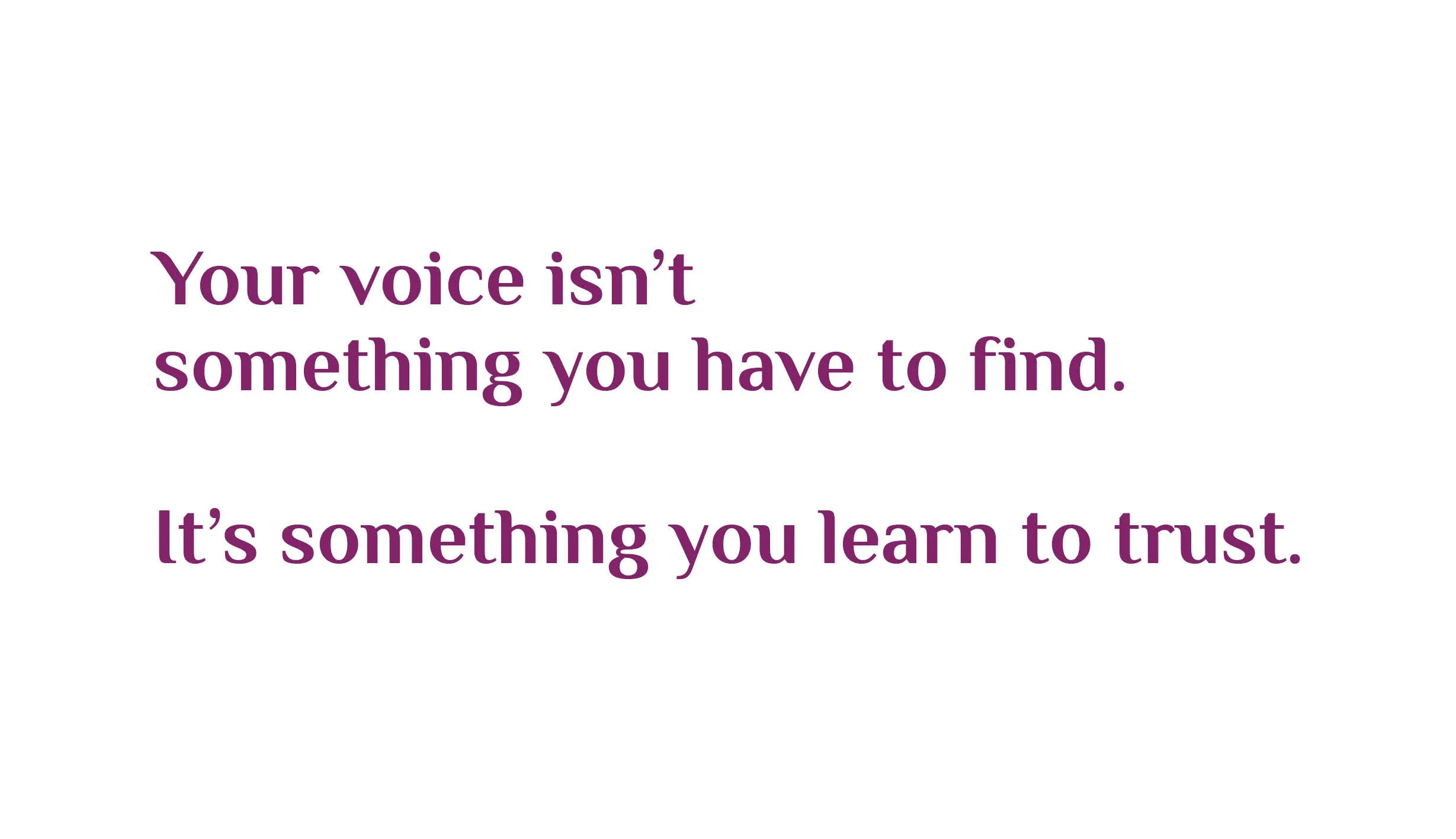
Because your voice isn't something you have to find.
It's something you learn to trust.
Ready to reconnect with your voice?
If you've been holding back your thoughts, questioning your perspective, or finding it difficult to express what matters to you, perhaps the answer isn't becoming someone more confident or outspoken.
Perhaps it's strengthening the relationship with yourself that allows your voice to be expressed with greater honesty, clarity, and authenticity.
At Phoenix Awakening, we offer a space to explore that relationship, understand what has shaped it, and develop the self-trust to express yourself in ways that remain true to who you are.
You don't need to become someone else before your voice matters.
You simply need a place where you can reconnect with it, trust it, and allow it to become a more natural expression of who you already are.
Ready to take the next step?
We'd be honored to walk alongside you.
Continue Exploring
Sometimes one experience connects naturally with another.